
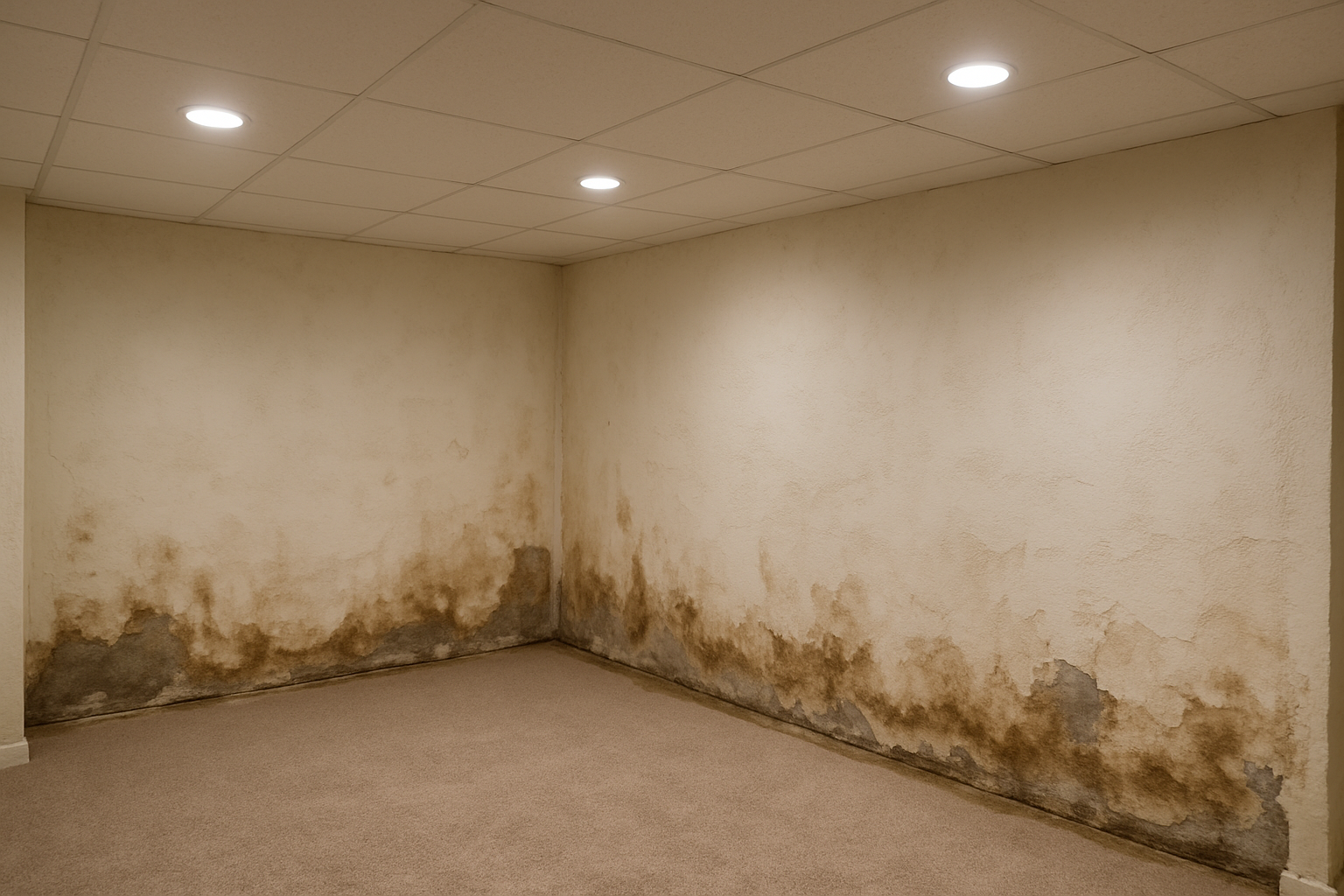


You’ve tried everything.
You’ve run a dehumidifier nonstop.
You’ve set up fans.
You might’ve even painted on one of those waterproof coatings that promised to fix it all.
And yet, your basement still feels damp, smells musty, and is just plain uncomfortable.
If you’re wondering why does my basement feel damp even when there’s no standing water, you’re not alone. The good news? You’re not doing anything wrong, and this isn’t a losing battle. The problem is that basement dampness isn’t caused by one issue. It’s usually several moisture problems working together behind the scenes.
Let's break down what causes dampness in a basement, why it smells the way it does, and which damp basement solutions actually help long-term.
Key Points: Why Your Basement Feels Damp
• A damp basement doesn't always mean there's a leak. Moisture can enter through concrete and air movement without visible water.
• Basements are surrounded by soil that holds moisture. That moisture constantly presses against the foundation walls and floor.
• Concrete is a porous material. It allows moisture to move through basement walls and contribute to ongoing dampness.
• Warm, humid air can leak into the basement. When it hits cooler surfaces, condensation forms and makes the basement feel clammy.
• Stack effect pushes moisture down into the basement. As warm air rises through the home, cooler, moisture-laden air is forced downward.
• Dehumidifiers manage moisture but don't prevent it. They help remove humidity from the air but don't address the root causes.
• Long-term damp basement solutions work together. Exterior water control, air sealing, and moisture management must all be addressed.
• Basement dampness can affect the entire home. Excess moisture can impact comfort, indoor air quality, and health upstairs.
What Does it Mean if Your Basement Feels Damp?
A damp basement doesn’t always look dramatic.
In many homes, there’s no flooding, no dripping walls, and no obvious leaks. Instead, basement dampness shows up in more subtle ways.
Signs of Basement Dampness Homeowners Notice
- A persistent damp basement smell or musty odor
- Basement walls that feel cool or clammy
- Air that feels heavy or muggy
- Dampness in basement walls without visible water
- A basement that never fully dries out, even with a dehumidifier
If your basement feels damp, it’s a sign that moisture is present – even if you can’t see where it’s coming from.
Why Basements are Prone to Dampness
Basements are uniquely positioned to struggle with moisture.
Understanding why helps explain why surface-level fixes rarely solve the problem.
Basement Dampness Reason #1: Basements are Underground
Your basement is surrounded by soil on all sides.
That soil holds moisture like a giant sponge.
Even if the ground around your home doesn’t look wet, the soil below the surface almost always contains moisture. That moisture constantly presses against your foundation, creating a steady source of basement dampness.
Basement Dampness Reason #2: Concrete Absorbs Moisture
Basement walls and floors are typically made of concrete or concrete block.
While concrete feels solid, it’s actually porous.
That means moisture in the surrounding soil can slowly move through the foundation. Over time, this contributes to dampness in basement walls and a basement that never quite feels dry.
Basement Dampness Reason #3: Air Leakage Brings Humidity Inside
Moisture doesn’t just come through the walls – it also comes through the air.
During the warmer months, warm, humid air leaks into the basement through areas like:
- Rim joists
- Small basement windows
- Gaps and cracks in the foundation
When that warm air meets cooler basement surfaces, condensation forms; this is why a basement can feel damp even when there’s no water coming in.
Basements Dampness Reason #4: Stack Effect Pulls Moisture Downward
Stack effect is a building science term that describes how air moves through your home.
In summer:
- Warm air enters and rises
- As it rises, it pushes cooler air downward
- That cooler air – along with moisture – ends up in the basement
This makes the basement the home’s humidity collection point, contributing to ongoing basement dampness.
Why a Damp Basement Smells Musty
A damp basement smell or musty odor is usually caused by elevated humidity.
How Moisture Creates Damp Basement Odors
When moisture lingers in the air and materials like wood, cardboard, or drywall, it creates that familiar musty smell.
Even if there’s no visible mold, excess moisture alone can cause odors that make the basement feel unpleasant and uninviting, according to ServPro.
Why Dehumidifiers Alone Don't Fix Basement Dampness
Dehumidifiers are helpful, but they’re often misunderstood.
What Dehumidifiers Can -- and Can't -- Do
A dehumidifier:
- Removes moisture from the air
- Helps control humidity levels
But it does not:
- Stop moisture from entering through the concrete
- Fix air leakage
- Address stack effect
That’s why many homeowners are constantly emptying the bucket and still dealing with a basement that feels damp.
Damp Basement Solutions That Actually Work
The most effective damp basement solutions focus on controlling moisture at the source, not just managing symptoms.
Control Exterior Water Around the Foundation
Make sure water is draining away from your home by checking:
- Gutters
- Downspouts
- Grading around the foundation
Poor drainage increases moisture pressure against the basement walls.
Air Seal the Basement and Rim Joist
Air sealing prevents humid air from sneaking into the basement.
The rim joist, in particular, is a major source of air leakage. Properly sealing this area can significantly reduce basement dampness and improve comfort throughout the home.
Reduce Moisture Movement Through Basement Walls
Because homes vary, moisture control solutions for basement walls aren’t one-size-fits-all.
A qualified contractor can help determine the right approach based on your home’s construction and moisture issues.
Use a Dehumidifier as a Support Tool
A dehumidifier works best when paired with other fixes.
It helps regulate moisture while long-term solutions are being put in place, but it shouldn’t be the only line of defense.
Can a Damp Basement Affect the Rest of the House?
Yes. A damp basement can affect upstairs comfort more than many homeowners realize.
How Basement Moisture Impacts Upstairs Comfort
Because air moves throughout the home, moisture from the basement can contribute to:
- Higher humidity upstairs
- Musty smells in living spaces
- Reduced comfort and efficiency
Can a Damp Basement Cause Health Problems?
In some cases, yes.
Basement Dampness and Indoor Air Quality
Excess moisture can create conditions where mold and allergens thrive.
While not every damp basement causes health problems, controlling moisture supports better indoor air quality and a healthier home overall.
Fixing Basement Dampness for Good
A damp basement isn’t caused by one single issue; it’s the result of several building science factors working together.
Once you understand why basement dampness happens, you can address it correctly and stop fighting the same moisture battle year after year.
With the right approach, your basement can finally feel dry, comfortable, and usable – and the rest of your home benefits too.
If you want to keep learning about building science and the weird things happening in your home, our Learning Center has plenty of resources to answer all of your questions.
Related Articles
What is Dew Point in Your Home and How to Measure It
Understanding the Sources of Water Vapor in Your Home
Ideal Indoor Humidity: How to Maintain the Perfect Balance in Your Home

Frequently Asked Questions About Basement Dampness
Why does my basement feel damp even when there's no water?
A basement can feel damp even without visible water because moisture moves through concrete and air, not just leaks.
Concrete walls and floors are porous, allowing moisture from the surrounding soil to pass through. Warm, humid air can also leak into the basement and create condensation when it meets cooler surfaces.
Why does my basement smell musty or damp?
A damp basement smell is usually caused by elevated humidity levels.
When moisture lingers in the air and materials like wood, cardboard, or drywall, it creates the musty odor many homeowners notice. Even without mold growth, excess moisture alone can cause unpleasant smells.
Why are my basement walls damp to the touch?
Dampness in basement walls is often the result of moisture moving through the foundation from the soil outside.
Because concrete is porous, it can absorb and release moisture over time, making walls feel cool, clammy, or slightly wet – especially during humid weather.
Why does my basement feel damp in the summer?
During summer, warm, humid outdoor air leaks into the basement through small gaps, rim joists, and windows.
When that warm air hits cooler basement surfaces, condensation forms, which makes the basement feel muggy even if there’s no standing water.
Can a damp basement affect upstairs rooms?
Yes.
A damp basement can affect upstairs comfort due to air movement and stack effect. Moist air can travel upward through the home, contributing to higher humidity levels, musty smells, and reduced comfort on upper floors.
Can a damp basement cause health problems?
In some cases, yes.
Basement dampness can contribute to indoor air quality issues, especially if moisture leads to mold growth or increased allergens like dust mites. While not every damp basement causes health problems, controlling moisture helps create a healthier home overall.
Is a dehumidifier enough to fix basement dampness?
A dehumidifier can help remove moisture from the air, but it doesn’t fix the source of the problem.
If moisture is continuously entering through air leaks or concrete, the dehumidifier will run constantly without fully solving the issue.
What are the best damp basement solutions?
The most effective damp basement solutions address moisture from multiple angles, including:
- Managing exterior water around the foundation
- Air sealing the basement rim joist
- Reducing moisture movement through walls
- Using a dehumidifier as a support tool, not the primary fix