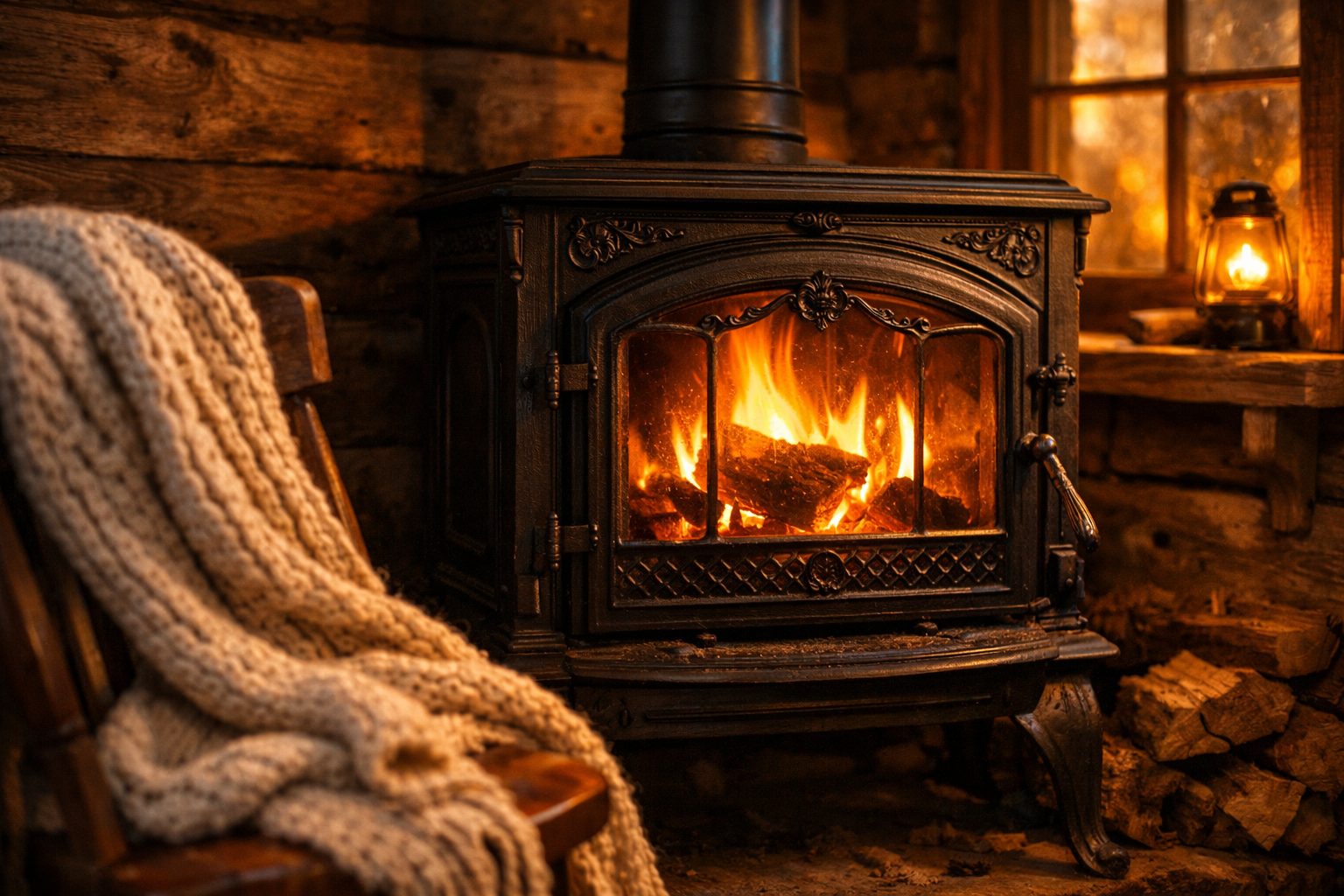


If you feel cold drafts coming in around your fireplace or wood-burning stove, your first thought might be simple: just add insulation.
It sounds easy enough, right?
Not so fast.
When it comes to insulation around a fireplace, wood stove, or stovepipe, heat safety codes matter a lot. These areas generate significant heat, and installing the wrong insulation directly against them can pose serious fire risks.
The good news? Yes, you can insulate around a fireplace or wood stove – you just have to do it the right way.
At RetroFoam, we help homeowners solve comfort problems like drafts, cold rooms, and high energy bills by creating an air seal. When it comes to heat-producing appliances, though, there’s an extra step to ensure everything stays safe and code-compliant.
Let’s break down how to insulate around a fireplace the right way.
Key Points: Adding Insulation Around a Fireplace or Wood-Burning Stove
• You should not place foam insulation or other combustible insulation materials directly against a fireplace, wood stove, or stovepipe.
• RetroFoam insulation and many spray foams are Class One Fire Rated, but they still require a noncombustible barrier near the heat sources.
• Installers use barriers such as metal thimbles, sheet-metal chases, mineral-wool-filled chases, or UL-listed heat shields to separate insulation from the heat source.
• Once the proper fire barrier is installed, foam insulation can be added right up against that barrier.
• Professional installation is important because code requirements vary based on the appliance, venting system, and local building code.
Why Can’t You Just Add Insulation Around a Fireplace?
This is one of the most common questions homeowners ask: Can you use insulation around a fireplace?
The answer is yes, but not directly against it.
Fireplaces, wood stoves, and stovepipes generate a lot of heat. That heat can make certain insulation materials unsafe if they’re installed too close together without protection.
Even though RetroFoam insulation is Class One Fire Rated and many spray foam products meet similar standards, that doesn’t mean they can be applied directly to high-heat surfaces.
There still needs to be a noncombustible barrier between the insulation and the heat-producing appliance.
That barrier is what keeps the installation safe and code-compliant.
How to Insulate Around a Fireplace Properly
If your goal is to stop drafts and improve comfort, sealing around the fireplace is absolutely the right move.
You just need the right process.
Step 1: Create a Noncombustible Barrier
Before any foam insulation is installed, professionals create a separation between the heat source and the insulation.
This barrier protects the insulation from direct heat exposure and ensures the installation meets building code, according to the 2021 International Building Code (IBC).
Common noncombustible barriers include:
- Metal thimbles or sleeves
- Sheet metal chases
- Mineral wool-filled chases
- Fiberglass-filled chases
- UL-listed heat shield systems
These materials are designed to handle high temperatures safely.
This is especially important when figuring out what type of insulation to use around a fireplace because the barrier – not just the insulation itself – is part of the solution.
Step 2: Install Insulation Against the Barrier
Once the proper barrier is in place, foam insulation can be installed right up against it.
This helps create the air seal needed to stop drafts without creating a fire hazard.
That means you get:
- Better comfort
- Fewer cold spots
- Less air leakage
- Improved energy efficiency
- Lower heating and cooling costs
This is why spray foam is often one of the best options for this application – it seals air movement far better than traditional insulation materials like fiberglass or cellulose.
How to Insulate Around a Wood Stove
The same basic rule applies when learning how to insulate around a wood stove.
You should never install foam insulation directly against the stove or vent pipe.
Instead, a contractor creates the required clearance and uses a noncombustible barrier system to separate the insulation from the heat source safely.
Because every stove setup is different, the exact spacing and materials can vary depending on:
- Manufacturer requirements
- Local building code
- Type of venting system
- Wall assembly
- Chimney design
This is why DIYing this kind of project can get risky fast.
How to Insulate Around a Wood Stove Pipe
If you’re wondering how to insulate around a wood stovepipe, the answer depends heavily on the type of pipe and how it passes through walls, ceilings, or attics.
Wood stovepipes require very specific clearances from combustible materials, including insulation.
Professionals often use:
- Fire-rated pipe collars
- Metal sleeves
- Framed chases with noncombustible materials
- Approved heat shield assemblies
Only after that protective system is installed can insulation safely be added nearby.
This helps eliminate drafts without violating fire safety code.
What Type of Insulation to Use Around a Fireplace
Homeowners often ask: What type of insulation should I use around a fireplace?
The best answer is usually a combination of materials. Let me explain.
For the Barrier
You need noncombustible materials like:
- Sheet metal
- Mineral wool
- Fire-rated sleeves
- UL-listed heat shields
For the Air Seal
Once the barrier is installed, spray foam, or in some cases, injection foam insulation is often the best option because it creates a strong air seal that traditional insulation simply can’t match.
Fiberglass may offer some thermal resistance, but it doesn’t stop airflow the way foam does.
And when drafts are the problem, air sealing is the real solution.
Why Hiring a Professional Matters
This is not a one-size-fits-all project.
There are many code requirements regarding fireplaces, wood stoves, and stovepipe clearances. The exact barrier needed and how much space is required depend on your specific setup.
An experienced insulation contractor will know:
- What barrier is required
- How much clearance is needed
- What materials meet code
- How to safely create an air seal
Trying to guess can lead to safety problems, failed inspections, or expensive repairs later.
When it comes to heat-producing appliances, this is one project where professional installation is worth it.
Adding Insulation Around Your Fireplace or Wood Stove
Yes, you can insulate around a fireplace.
Yes, you can improve drafts around a wood stove.
And yes, spray foam is often one of the best solutions for creating that air seal.
But the key is doing it safely.
That means installing a proper noncombustible barrier first, following code requirements, and working with a contractor who understands how to handle these high-heat areas correctly.
At RetroFoam, we help homeowners across the country improve comfort and energy efficiency while making sure the job is done right.
Related Articles
How to Get on the Same Page as a Home Inspector for Your Insulation Project
Do You Need a Permit for Insulation? Understanding the Requirements
Knob and Tube Wiring and RetroFoam: Can You Add Insulation to an Older Home?

FAQs About Insulation Around a Fireplace
Can you use insulation around a fireplace?
Yes, but not directly against the fireplace or chimney components.
A noncombustible barrier must be installed first to separate the insulation from the heat source safely.
What type of insulation should be used around a fireplace?
Noncombustible materials like mineral wool and sheet metal are used for the fire barrier.
Once that barrier is in place, spray foam, or in some cases, injection foam, can be used to create an air seal around it.
How to insulate around a wood stove safely?
A contractor should create proper clearance and install a fire-safe barrier system before adding insulation nearby.
Foam should never touch the stove or pipe directly.
How to insulate around a wood stovepipe?
Wood stovepipes need specific clearances from insulation.
Installers use metal sleeves, collars, and fire-rated barriers before insulating the surrounding area.
Is spray foam safe around fireplaces?
Yes – when installed correctly.
Spray foam should never be applied directly against a fireplace or stovepipe, but it can be safely used once a noncombustible barrier is installed.
Does fiberglass work around fireplaces?
Fiberglass can be used in some chase systems, but it does not create an air seal like foam insulation does.
If drafts are the issue, foam is usually the better long-term solution.