

If you have poured concrete walls, chances are you’ve asked yourself at some point: “Why is my house so uncomfortable, and why are my energy bills so high?”
You’re not alone, and more often than not, the problem is hiding right behind your drywall. The biggest issue is – your walls aren’t like those in a traditional home. Instead, you have poured concrete walls.
The good news? Learning how to insulate poured concrete walls doesn’t mean tearing your house apart. There are ways to add a material like injection foam insulation, improve comfort, and boost energy efficiency without a full remodel.
Let’s break it down.
Key Points: Insulating Poured Concrete Walls
• Poured concrete walls are sold and don’t have cavities like block walls.
• Most homes have furred-out stud cavities added during construction.
• These cavities are often left uninsulated, leading to discomfort.
• Insulation can be added by injecting foam into the stud cavities.
• The process requires minimal disruption – no demo needed.
• Homeowners typically only need light sanding and repainting afterward.
• Proper insulation creates an air seal that improves comfort and efficiency.
What Makes Poured Concrete Walls Different?
Before diving into how to insulate a poured concrete wall, it helps to understand what you’re working with.
When people think of concrete walls, they’re usually thinking of concrete block. Those blocks have hollow cores that can be filled with insulation.
Poured concrete walls? Totally different. They’re solid – like your driveway or sidewalk. In areas like Florida and Louisiana, poured-concrete walls are favored for their greater resistance to hurricanes and tornadoes, according to the International Association of Certified Home Inspectors.
There’s no cavity inside the concrete to fill. So, how do you insulate something solid?
Where Insulation Goes in Poured Concrete Walls
During construction, contractors typically fur out poured concrete walls.
That means they build a stud cavity in front of the concrete so drywall can be installed.
This creates a cavity between the drywall and the concrete wall.
Here’s the issue: In many homes, that cavity is completely empty.
That means:
- No insulation
- No air barrier
- And a direct path for heat loss and drafts
How to Insulate Poured Concrete Walls (Step-by-Step)
If you’re wondering how to insulate concrete-poured walls without remodeling, here’s exactly how it works from inside the home using RetroFoam insulation.
Step 1: Prep the Area
Before any work begins, the crew protects your home:
- Floors and furniture are covered with plastic
- Work areas are cleared
- Homeowners may need to move furniture away from exterior walls
This keeps everything clean and contained.
Step 2: Locate the Stud Cavities
Installers snap a chalk line across the wall to mark the location of each cavity.
This ensures:
- Precise drilling
- Full coverage
- A clean install
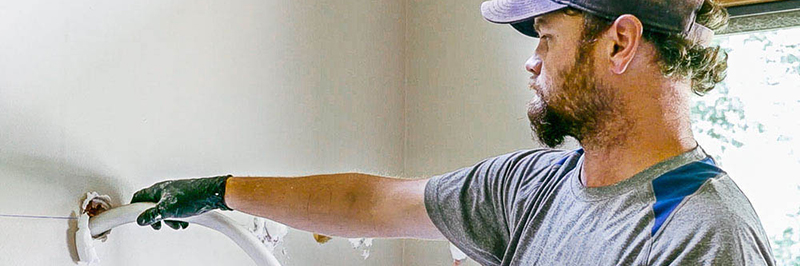
Step 3: Drill Access Holes
Small holes are drilled into each stud cavity.
These holes allow installers to:
- Insert the injection hose
- Evenly inject insulation throughout the cavity
Step 4: Check for Obstructions
Before injecting foam, installers check the interior of the wall with a specialized tool.
They’re looking for:
- Fire blocks
- Stud blocking
- Any obstructions
If something is in the way, they simply drill another hole above it or below it.
Step 5: Inject the Foam
Now the fun part of the job begins.
The installer:
- Fills from the bottom up
- Then from the top down
This ensures the cavity is completely filled and creates a full air seal, which is key to improving comfort and energy efficiency.
Step 6: Plug and Patch
Once the injection foam is installed:
- Holes are plugged
- Tape is applied
- A rough drywall patch is added
The crew cleans everything up before leaving.
All that’s left for the homeowner is:
- Light sanding
- Applying a fresh coat of paint
And just like that, it looks like nothing ever happened.
What About New Construction or Remodels?
If your drywall isn’t up yet, you have another option for insulation.
Instead of injection foam, you can apply spray foam insulation directly in the stud cavities.
This insulation method is common in:
- New builds
- Major renovations
But for existing homes, injection foam is typically the best solution because it avoids tearing everything apart.
Why Insulating Poured Concrete Walls Matters
If your stud cavities are empty, your home is:
- Losing heat in the winter
- Gaining heat in the summer
- Letting air move freely through the walls
By insulating poured concrete walls, you can:
- Improve year-round comfort
- Reduce drafts
- Lower energy bills
- Maintain more consistent temperatures
It’s one of those upgrades you don’t see, but you definitely feel.
If your home has poured concrete walls and feels uncomfortable, your insulation – or lack of it – could be the culprit.
The good news is you don’t need a full remodel to fix it.
Now that you know how to insulate poured concrete walls, you can take a simple, minimally invasive step toward a more comfortable and energy-efficient home. When you’re ready, check out our Find a Dealer page to locate a RetroFoam dealer in your area.
Related Articles
Insulating Concrete Block Walls with RetroFoam
Insulating Exterior Walls from Inside with RetroFoam
How Do RetroFoam Installers Know the Cavity is Full When Insulating Existing Walls?

FAQs About Insulating Poured Concrete Walls
Can you insulate poured concrete walls without removing drywall?
Yes.
Injection foam allows installers to fill the wall cavities by drilling small holes – no demolition required.
What is the best way to insulate poured concrete walls?
For existing homes with finished walls, injection foam is often the best option because it fills the cavity completely and creates an air seal.
If the home is new construction or undergoing a remodel and there isn’t drywall in place, using spray foam insulation is the best option.
Are poured concrete walls always uninsulated?
Not always, but it’s very common – especially in older homes or basements.
Will this actually make a difference?
Yes.
Homeowners often notice:
- More even temperatures
- Fewer drafts
- Lower energy bills
Do I need to prepare my home?
Just a little:
- Move furniture away from exterior walls
- Clear access for the crew
They’ll handle the rest.