

When you start looking into insulation options, one material you’ll see pop up again and again is mineral wool.
But what is mineral wool insulation, what is mineral wool insulation made of, and how does it actually perform in your home?
Let’s break it all down in a way that actually makes sense – no confusing jargon, just what you need to know as a homeowner.
Key Points: Mineral Wool Insulation
• Mineral wool is a dense, fiber-based insulation used in open wall, attic, and floor cavities.
• It’s also called rock wool or slag wool.
• Made from natural stone and recycled industrial materials.
• Known for sound dampening, fire resistance, and durability.
• Does not air seal, meaning drafts can still pass through.
• Performance depends heavily on proper installation.
What is Mineral Wool?
So, what is mineral wool?
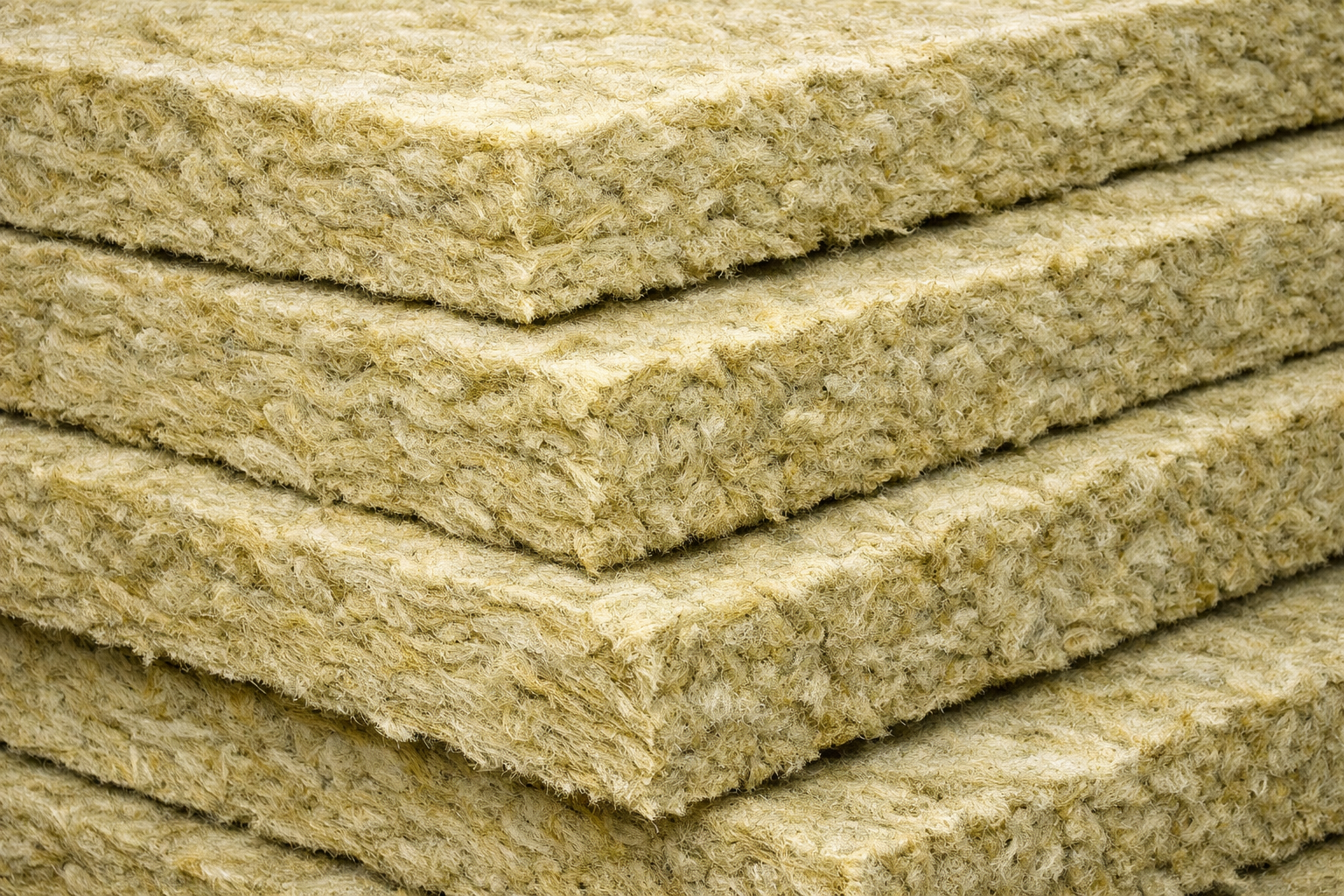
Mineral wool is a dense, fiber-based insulation designed to fit into open cavities like wall studs, floor joists, and attic spaces.
It typically comes in:
- Batts (pre-cut panels)
- Rolls
- Loose-fill (less common)
If you’ve seen fiberglass insulation before, mineral wool looks similar, but it’s:
- Heavier
- More rigid
- More dense
That density is what gives mineral wool some of its standout performance benefits.
What is Mineral Wool Insulation Made Of?
Now let’s get into what mineral wool insulation is made from – because this is where it gets interesting.
Mineral wool is made from:
- Natural stone (like basalt rock)
- Recycled industrial byproducts (like slag from steel production)
These materials are:
- Heated to extremely high temperatures
- Melted down into a liquid
- Spun into fine fibers (kind of like making cotton candy, but much hotter and less delicious)
- Compressed into batts or other insulation forms
The result is a dense, durable fiber insulation that performs differently from traditional materials.
What is Mineral Wool Batt Insulation?
When most homeowners are talking about mineral wool, they’re referring to mineral wool batt insulation.
These are:
- Pre-cut panels sized to fit between studs or joists
- Designed for easy placement in open cavities
Mineral wool batts are:
- Rigid enough to hold their shape
- Flexible enough to press into place
They’re commonly used in:
- Exterior walls
- Interior walls (especially for sound control)
- Floors and ceilings
How Does Mineral Wool Insulation Work?
At its core, mineral wool works by slowing down heat transfer and reducing sound movement.
Here’s how it works.
1. Slows Heat Flow
The dense fibers help reduce heat moving through walls and ceilings by:
- Limiting conduction
- Reducing convection within the cavity
2. Absorbs Sound
Because of its density, mineral wool:
- Absorbs sound waves
- Reduces noise between rooms or from outside
This makes it a popular choice for:
- Bedrooms
- Offices
- Shared interior walls
3. But it Does NOT Air Seal
This is the part a lot of homeowners miss.
Mineral wool:
- Does not stop air movement
- Allows air to pass through and around it
That means:
- Drafts can still happen
- Energy loss from air leakage is still possible
So while it helps with comfort, it doesn’t fully address air leakage issues.
Pros of Mineral Wool Insulation
Let’s talk about where mineral wool really shines.
Excellent Sound Dampening
Great for reducing noise between rooms or from outside sources.
Highly Fire-Resistant
Mineral wool is naturally fire-resistant and can withstand very high temperatures.
Moisture Resistant
It doesn’t easily absorb or retain water, helping reduce mold concerns.
Holds Its Shape
Unlike some insulation types, it:
- Doesn’t sag
- Doesn’t settle
- Stays in place over time
Cons of Mineral Wool Insulation
Like any material, it’s not perfect.
Does Not Air Seal
Air can still move through the material, which can impact energy efficiency.
Requires Precise Installation
Gaps or poor cuts can reduce performance significantly.
Higher Cost Than Fiberglass
Typically more expensive upfront than traditional fiberglass insulation.
Protective Gear Needed
Installation can require:
- Gloves
- Long sleeves
- Respiratory protection
How is Mineral Wool Installed?
Mineral wool is typically installed in open cavities, meaning areas where wall studs or joists are exposed.
Mineral Wool Installation Process
- Measure the cavity
- Cut the batt to fit precisely
- Press it into place between studs or joists
- Trim around obstacles like:
- Electrical boxes
- Wiring
- Plumbing
Because the material is rigid, it stays in place once installed – but precision is everything.
If your main issue is:
- Drafts
- Air leakage
- High energy bills
Then you’ll want to consider whether air sealing needs to be part of the solution – not just insulation alone.
Learn More About Home Insulation
Now that you have a better understanding of mineral wool insulation, you may have more questions about home insulation.
If you want to keep diving into insulation options and what actually works best for your home, check out our Learning Center for more articles, videos, and real-world explanations.
Related Articles
What is Injection Foam Insulation?
What is Fiberglass Insulation?

FAQs About Mineral Wool Insulation
What is mineral wool insulation used for?
Mineral wool insulation is used in walls, floors, ceilings, and attics to improve thermal performance and reduce sound transmission.
What is mineral wool insulation made from?
Mineral wool insulation is made from natural stone and recycled industrial byproducts that are melted and spun into dense fibers.
Is mineral wool better than fiberglass insulation?
It depends on your goals.
Mineral wool offers better sound dampening and fire resistance, but it is typically more expensive and still does not air seal.
Does mineral wool insulation stop drafts?
No, mineral wool does not fully air seal.
Air can still move through and around it, which means drafts can still occur.
Is mineral wool insulation safe?
Yes, when installed properly with appropriate protective gear, mineral wool is considered safe and stable in the home.
Can mineral wool insulation be a DIY project?
It can be, but it requires careful measuring and cutting.
Poor installation can lead to gaps and reduced performance.