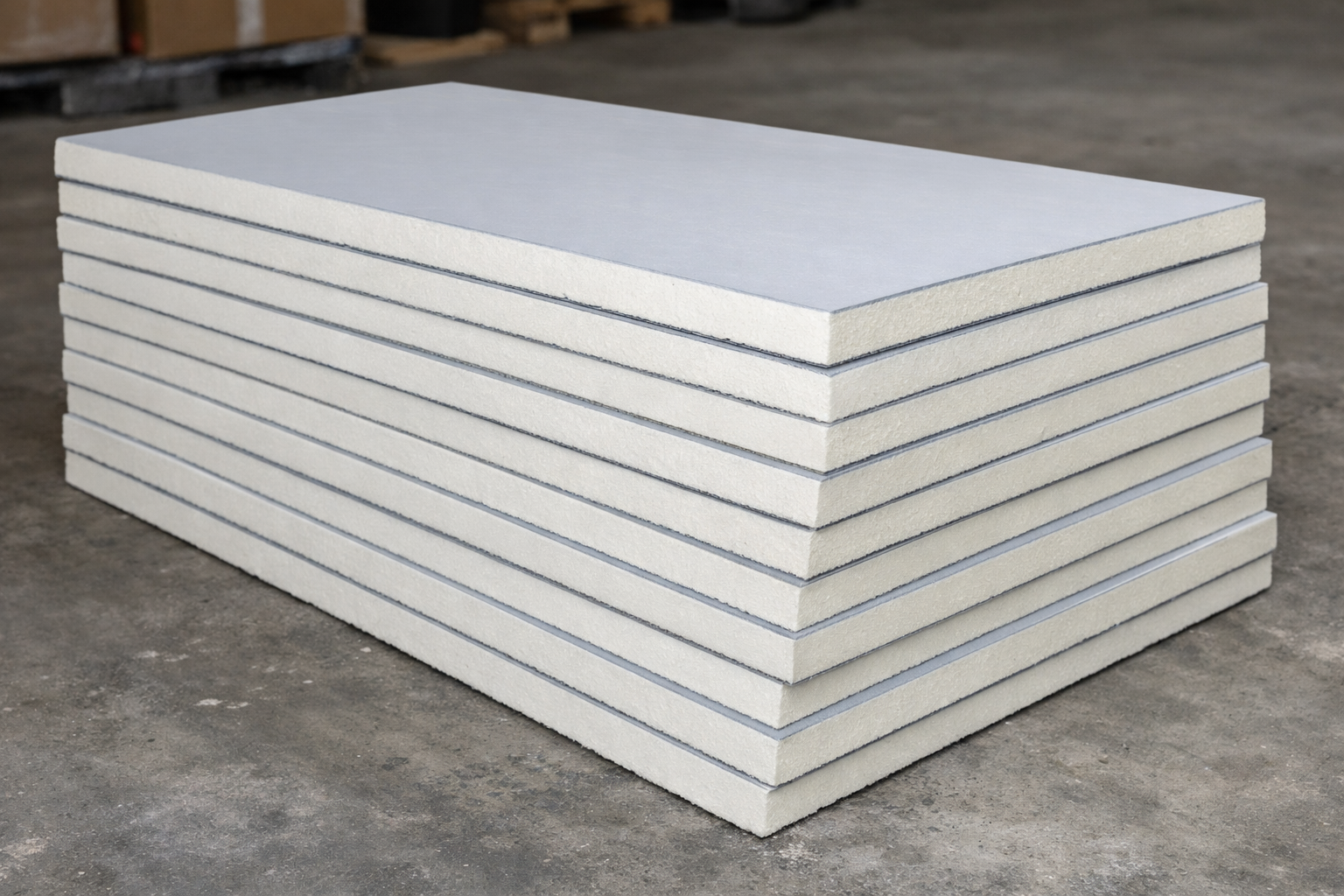


Foam board insulation is used in homes across the country.
It can add R-value, reduce heat transfer, and work well in places like basements and exterior walls.
But foam board is not a cut-it, place-it, and forget-it kind of material.
If the boards are cut incorrectly, the seams are left open, or moisture is not considered, you might not get the comfort and energy efficiency you expected. In some cases, a small installation mistake can turn into a much larger problem hiding behind the wall.
That does not mean foam board insulation is bad. It just means the details matter – a lot.
If you are considering foam board for your home, here are the most common foam board insulation problems to watch for and what can be done to avoid them.
Key Points: Foam Board Insulation Problems
• Foam board can slow heat transfer, but it will not automatically stop air leaks.
• The seams, edges, and gaps around each board must be sealed if the material is meant to create an air barrier.
• Foam board does not feed mold, but moisture trapped around it can lead to mold growth on nearby materials.
• Different types of foam board perform differently, so the product must match the project.
• Foam plastic insulation usually needs a code-approved protective covering.
• Foam board is easiest to install while walls and other cavities are open. It is not usually practical for insulating existing enclosed walls.
What Is Foam Board Insulation?
Foam board insulation, also called rigid foam insulation, comes in firm panels instead of rolls, batts, or loose material.
It is commonly used on basement walls, foundation walls, roofs, and exterior wall sheathing, according to Energy Star.
There are three main types of foam board insulation, according to the U.S. Department of Energy.
- Expanded polystyrene, or EPS, is a lightweight foam board that can be used in several above-grade and below-grade applications.
- Extruded polystyrene, or XPS, is a denser foam board often chosen for projects where moisture resistance and strength are important.
- Polyisocyanurate, or polyiso, generally offers a higher labeled R-value per inch and often includes a foil or other facing.
They might look similar in the home improvement store, but these products do not all behave the same way. Their R-Values, moisture resistance, vapor permeance, and approved uses can vary.
In other words, grabbing whichever board is on sale is not the best insulation strategy.
What Problems Can Foam Board Insulation Cause?
Most rigid foam insulation problems are not caused by the material suddenly deciding to misbehave.
They happen when the wrong product is used, the boards are installed incorrectly, or the rest of the home is not considered.
Here are six problems homeowners can run into.
1. Air Can Leak Through Gaps and Seams
Foam board can reduce heat moving through the panel, but air can still sneak around it.
Every board has edges and seams. There may also be gaps around electrical wires, plumbing, framing, windows, doors, and other obstacles. If those openings are not sealed, outside air can continue moving into the house while conditioned air escapes.
This is why insulation and air sealing are not exactly the same thing. You can have plenty of insulation in a wall and still have an uncomfortable, drafty room if air is moving around it.
How Can You Prevent Air Leaks Around Foam Board?
If the foam board is supposed to act as an air barrier, the boards need to create one continuous layer.
That means sealing the seams with a compatible tape and sealing the edges and openings with an approved caulk, sealant, or one-part foam. The foam board also needs to connect to the other parts of the home's air barrier.
Be sure to follow the manufacturer's instructions. Not every tape, adhesive, or sealant will stick to every foam board. Some products can even damage the foam.
2. Foam Board Must Be Cut to Fit
Homes have an annoying habit of not being perfectly square.
That becomes a problem when you are working with a rigid material that must be cut to fit around studs, pipes, wiring, masonry, and all the other twists and turns inside a home.
If a board is cut too small, the gaps can allow air to move around the insulation. If it is cut too large and forced into place, it may bow, crack, or sit unevenly against the surface.
Foam board installed between studs also does not cover the framing. Heat can move through those studs more easily than it moves through the insulation. That is known as thermal bridging.
How Can You Avoid Gaps Around Foam Board?
Measure each space before cutting the foam board.
Do not assume every stud cavity or section of wall is the same size because, especially in an older home, it probably is not.
When foam board is installed between framing, each panel should fit closely, and the perimeter should be sealed. Installing a continuous layer of foam over the framing can also reduce thermal bridging, although this type of project can affect how siding, drywall, windows, and doors are installed, specifically in new construction.
If the project involves more than a few straightforward cuts, it may be time to call a professional.
3. The Wrong Setup Can Trap Moisture
There is an important distinction to make here.
Foam board itself is generally not a food source for mold. However, that does not mean a wall containing foam board cannot develop a moisture or mold problem.
If warm, humid air reaches a cold surface behind the board, condensation can form. Moisture can also become trapped if the wall is not designed to dry properly. Mold may then grow on nearby wood, paper-faced drywall, dust, or other organic materials.
Different foam boards manage water vapor differently. Some are more vapor-open, while others significantly slow vapor movement. The facing and thickness of the board can make a difference, too.
That is why moisture control is about more than buying a board labeled water-resistant.
How Can You Prevent Moisture Problems?
First, fix any water problem before installing insulation.
Covering a damp foundation, roof leak, plumbing leak, or water-damaged wall does not make the moisture disappear. It just makes it harder to see.
Next, choose a foam board that is appropriate for the climate and the area being insulated. The entire wall, roof, or foundation assembly needs to manage moisture and still have a safe way to dry.
On basement walls, foam board generally needs to sit tightly against the foundation. The seams and edges should be sealed so indoor air cannot circulate behind the panels and condense against the cooler wall.
If you are not sure where the wall can dry or whether you need a vapor retarder, it is worth asking a qualified contractor or building professional before starting.
4. The Labeled R-Value Is Not the Whole Story
R-Value tells you how well an insulation material resists heat flow.
It is useful, but it does not tell you how the entire wall or roof will perform.
For example, a foam board might have an impressive R-Value on the label. If the installation has gaps, open seams, air leaks, or exposed framing, the finished area may not perform anywhere near that number.
The performance of some foam products can also change with temperature or over time. Polyiso products, for example, may use long-term thermal resistance testing to account for changes that happen as the product ages.
How Can You Get the Performance You Expect?
Look beyond the R-Value per inch.
Make sure the product is approved for the intended area and review its moisture characteristics, facing, strength, temperature limitations, and installation requirements.
The thickness of the foam board should also meet the needs of the climate and the project. Most importantly, the material must be installed without gaps and as part of a complete air-control system.
An R-Value on a label is only as good as the installation around it.
5. Exposed Foam Board Can Create a Fire-Code Problem
Foam board is a type of foam plastic insulation, which means it is combustible.
In many areas of a home, building codes require foam plastic to be separated from the living space with an approved thermal barrier. Half-inch drywall is a common example, but the requirement depends on the location, product, and code adopted in your area.
Attics, crawl spaces, basements, garages, and certain tested assemblies may have different rules. The fact that a room is unfinished does not automatically mean the foam board can be left exposed.
How Can You Protect Foam Board Insulation?
Check the manufacturer's instructions and local building codes before installing the material.
If the foam board will be visible when the project is done, talk with the local building department or a qualified contractor about the required protective covering.
Do not assume ordinary paint or any random coating will provide the necessary fire protection. A product must be approved for that specific purpose and installation.
6. Foam Board Is Difficult to Install in Existing Walls
Foam board is much easier to install when the framing or wall surface is already exposed.
Think new construction, a basement with open walls, or an exterior renovation where the siding has been removed.
Installing rigid panels in an existing enclosed wall is a very different story. In most cases, the drywall or exterior cladding would need to be removed. Trying to slide small pieces of foam board into a finished wall is unlikely to create complete coverage or a reliable air seal.
That can turn what sounded like a simple insulation project into a full-blown remodel.
What Can You Use in Existing Walls Instead?
The insulation should match the space where it is being installed.
Foam board may make sense for an exposed foundation wall or as continuous exterior insulation during a siding project. For existing enclosed wall cavities, injection foam may be a more practical option.
RetroFoam insulation is injected into enclosed exterior walls through small access holes. The material is designed to flow around wires, pipes, and existing obstacles as it fills the available space.
How Do You Know If Foam Board Insulation Is Not Working?
Foam board is often hidden behind a finished surface, so you may not be able to see an installation problem.
Your home may still provide a few clues.
Signs that the insulation or surrounding assembly needs a closer look include:
- Rooms that are difficult to heat or cool
- Walls or floors that feel unusually hot or cold
- Drafts near seams, rim joists, or wall penetrations
- Energy use that remains higher than expected
- Condensation or musty odors near insulated areas
- Visible foam boards that are loose, bowed, cracked, or pulling away
- Tape that is peeling away from the seams
These signs do not automatically mean the foam board is the problem. Leaky ductwork, HVAC issues, windows, moisture sources, and air leaks elsewhere in the home can cause similar symptoms.
An energy audit, blower door test, infrared inspection, or moisture evaluation can help take some of the guesswork out of the diagnosis.
Is Foam Board Insulation Worth It?
Foam board insulation can absolutely be worth it when it is used in the right place and installed correctly.
It can provide continuous insulation, reduce thermal bridging, and work well on foundation walls, exterior sheathing, and other open surfaces. The catch is that every seam, edge, gap, and transition matters.
Foam board is less forgiving than some homeowners expect. It is also not the easiest option when the area is already enclosed.
Before choosing it, consider:
- Where the insulation will be installed
- Whether the area is open or already finished
- How air leaks will be sealed
- How the assembly will manage and release moisture
- What protective covering is required
- Whether the product is approved for that application
If the answers line up, foam board may be a good fit. If they do not, another insulation material may make more sense.
Choosing the Right Insulation for Your Home
There is no single insulation material that wins every time.
Foam board, spray foam, injection foam, fiberglass, cellulose, and mineral wool all have strengths and limitations.
The best insulation is the one that solves the problem in that specific part of your home.
If your goal is to insulate existing exterior walls without tearing them apart and to create an air seal, contact a RetroFoam dealer to find out whether injection foam is available in your area and whether your home is a good fit.
Related Articles
4 Injection Foam Insulation Problems
Cellulose Insulation Problems: What Homeowners Need to Know
Is Fiberglass Insulation Bad for You? Common Problems Homeowners Should Know About

Frequently Asked Questions About Foam Board Insulation
What Are the Disadvantages of Foam Board Insulation?
The main disadvantages of foam board insulation include the need for precise cutting, air leakage through unsealed seams, possible moisture problems in a poorly designed assembly, fire-protection requirements, and difficulty installing the boards inside existing finished walls.
Does Foam Board Insulation Need to Be Sealed?
Yes, if the foam board is intended to help create an air barrier.
The seams, edges, penetrations, and connections to surrounding materials must be sealed with products that are compatible with the board. Simply placing the panels against a wall will not stop air from moving around them.
Can Mold Grow on Foam Board Insulation?
Foam board itself generally does not provide food for mold.
However, moisture trapped around the foam can allow mold to grow on dust, wood, drywall paper, and other organic materials nearby.
Does Foam Board Insulation Lose R-Value Over Time?
It depends on the type of foam board.
The thermal performance of some closed-cell foam products can change as they age. Applicable polyiso products use long-term thermal resistance values to estimate how the insulation will perform over time. Always check the current information for the specific product.
Does Foam Board Insulation Stop Air Leaks?
The board can resist airflow through the panel, but the full installation only controls air leakage when the panels create a continuous layer, and all seams, edges, gaps, and penetrations are sealed.
Can Foam Board Be Left Exposed in a Basement?
In many cases, no.
Foam plastic insulation typically requires a code-approved thermal barrier, although exceptions and tested assemblies exist. Check the manufacturer's instructions and local building code before leaving foam board exposed.
Is Foam Board Good for Basement Walls?
Foam board can work well on basement walls when existing water problems are fixed first.
The product must be rated for the application, installed tightly against the foundation, sealed around the edges and seams, and covered with any required fire protection.
Can You Install Foam Board Insulation in Existing Walls?
Foam board can be installed when the wall cavity or exterior sheathing is exposed.
Installing it in a finished wall usually requires removing drywall or siding. Injection foam may be a more practical option for certain existing enclosed walls.